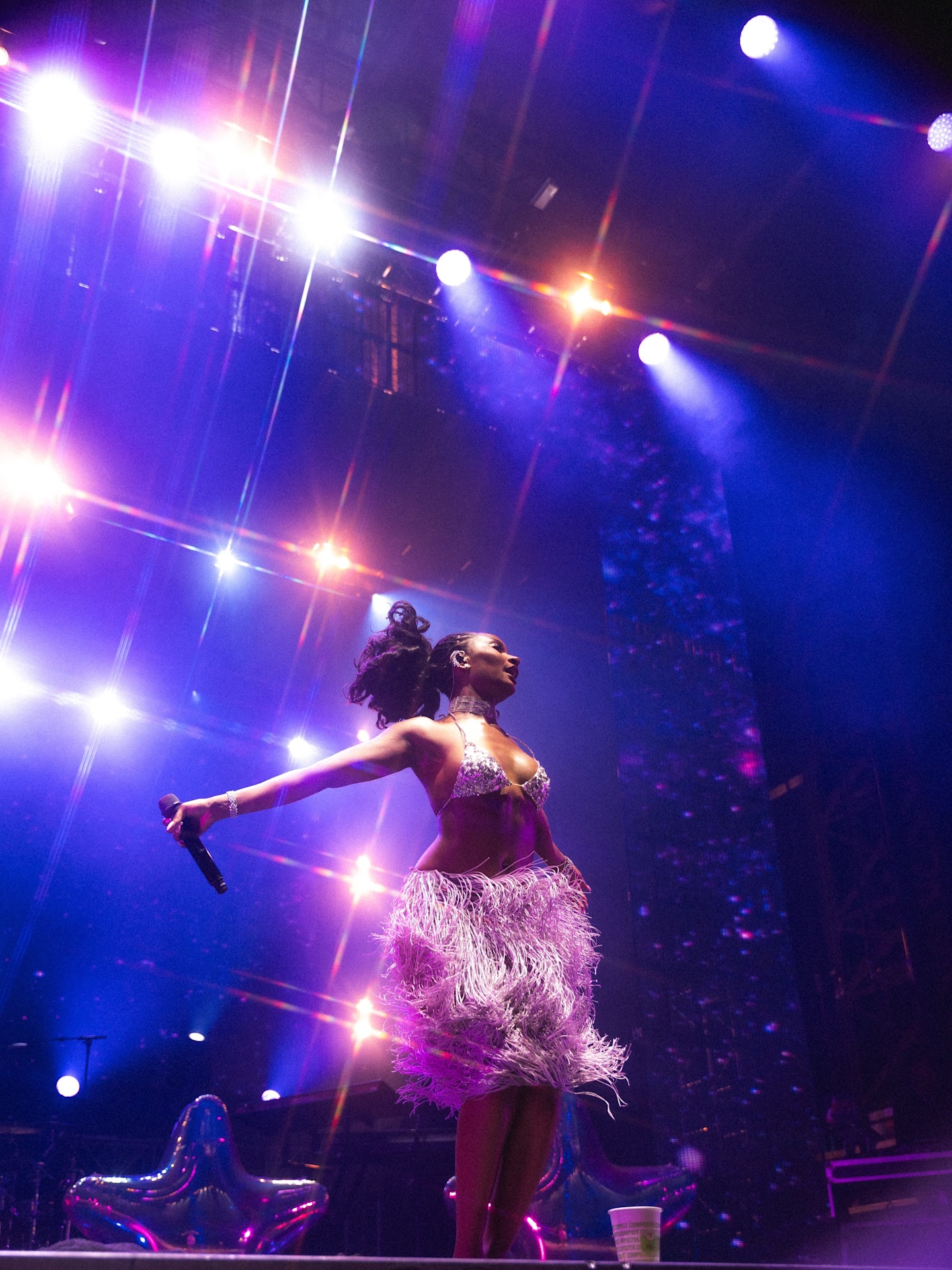
Ayra Starr is belting into a bedazzled microphone with one giant silver star sitting atop it. The crowd in front of her is screaming along bar for bar, even though the song she’s playing, “Dangerous,” dropped just 11 days ago. Night has fallen in London, so that means the purple lights punctuating Starr's set as she closes the North stage at All Points East U.K. pierce through the dusty festival air even more dramatically.
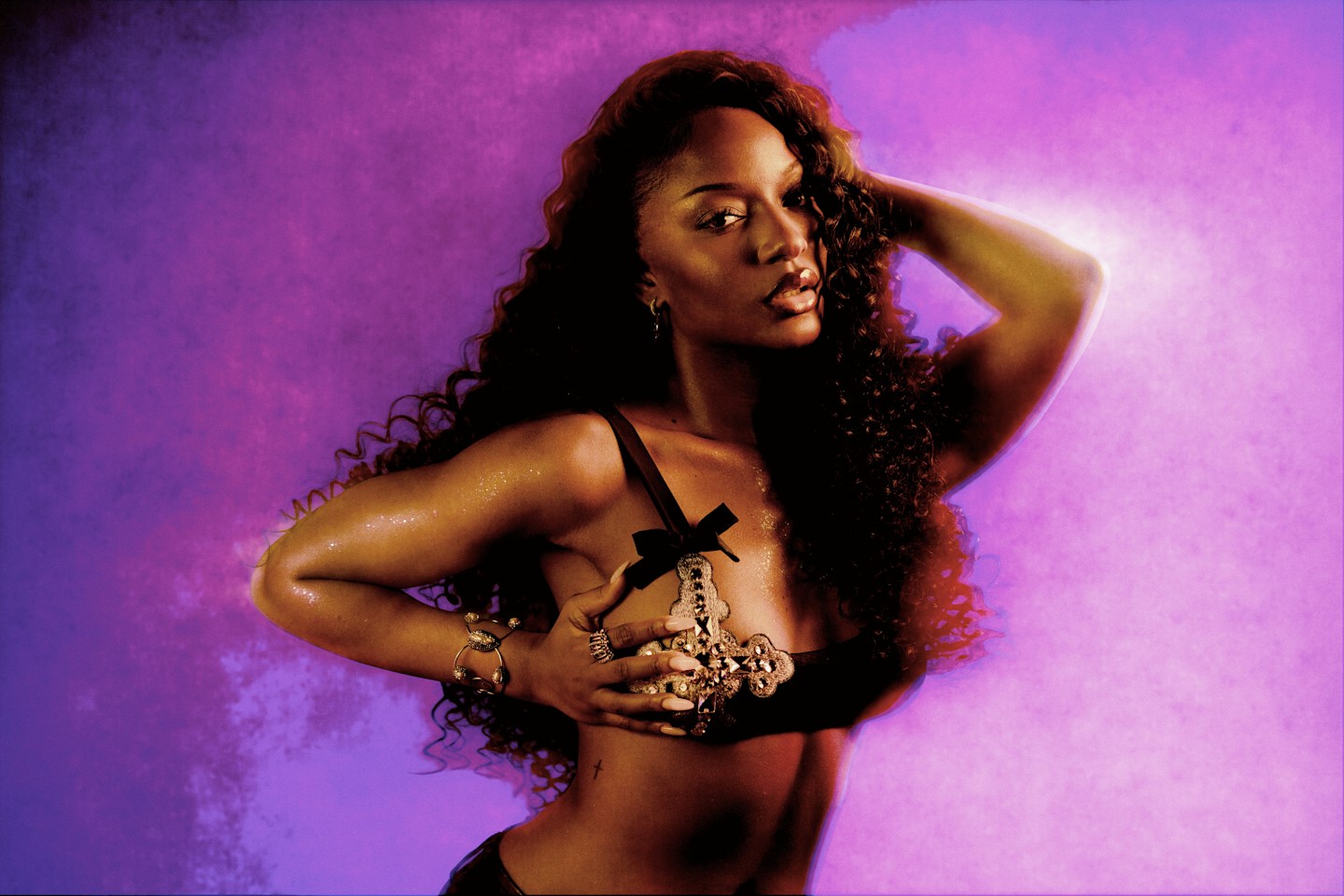
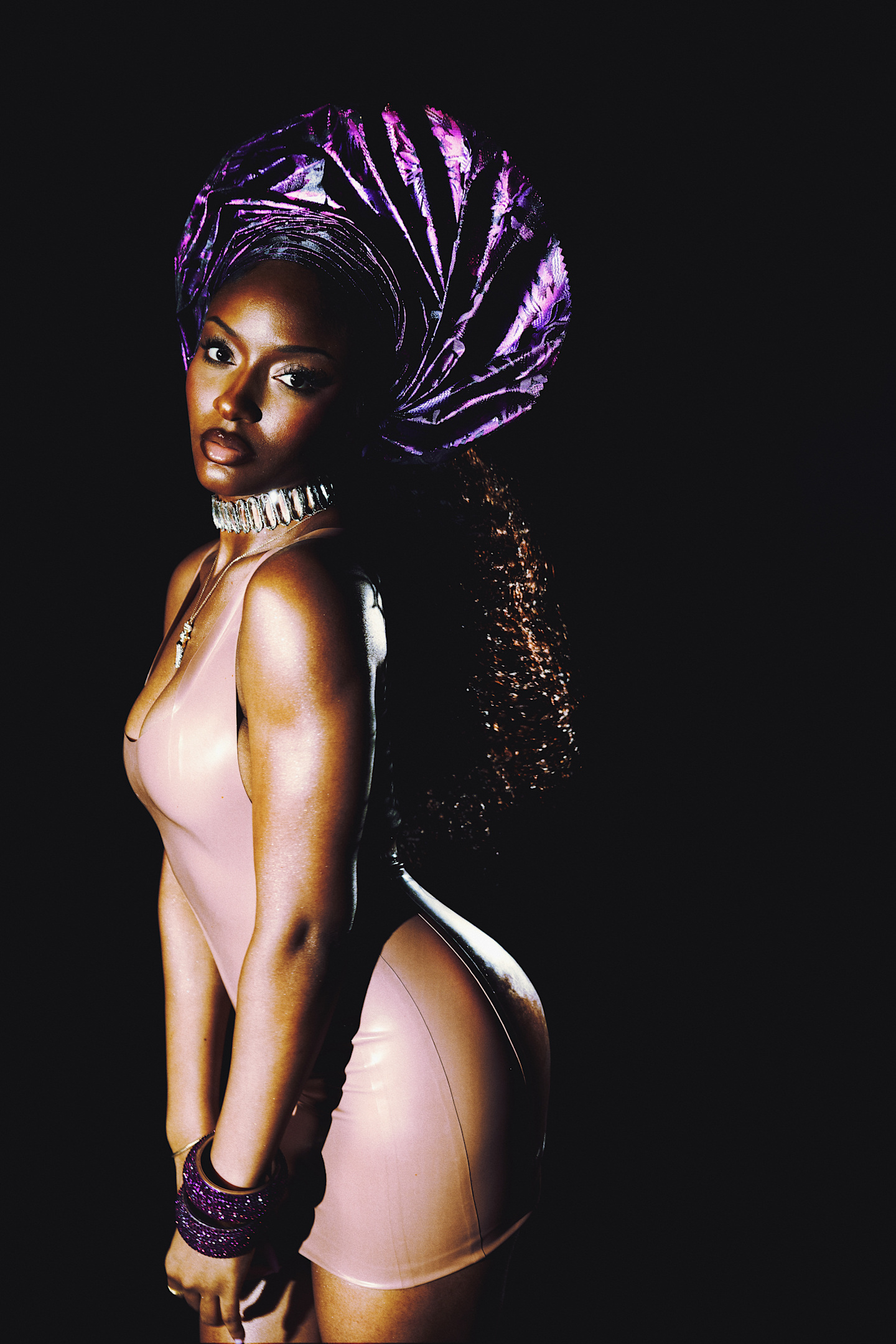
Standing in the crowd, I am reminded of something she told the week prior when we connected over Zoom a few days before she dropped her latest album Starrgirl. “There’s no other Ayra Starr. There’s no other Ayra Starr that’s Yoruba, there’s no other Ayra Starr that’s going to have a gele [a traditional West African headwrap] on her album cover,” she said from her New York City apartment. Her camera was off but her personality, one that suggested supreme confidence, shot through the screen like the celestial beam of light she wields on the cover of Starrgirl. “I’ve been moving from the point of view of I have to be. With Starrgirl, it’s just like, I am.”
I’ve been moving from the point of view of I have to be. With Starrgirl, it’s just like I am. —Ayra Starr
Ayra’s newfound mindset — that she’s already everything she wants to be — makes sense for a genre bender in African music like herself. Across her discography, 2021’s 19 & Dangerous and 2024’s The Year I Turned 21, she has never tried to squeeze herself to fit into traditional Afrobeats frameworks. Her third studio album continues Ayra’s interpretation of bending expectations as, perhaps, a 24-year old who grew up a One Direction fan, loves God, left Lagos for New York, parties with Justine Skye, travels the world, keeps her love life lowkey, has a tight-knit relationship with her family and is besties with Rema, is meant to do. The album is still as Nigerian as can be, with its amapiano log drum heartbeat and Afrobeat rhythms — while mingling with R&B and pop. "Anybody can make a song, but I made a good album,” she says. “And that’s a flex.”
During our call on August 13, the princess of Benin, Nigeria, is on bed rest, healing from endometriosis surgery. "Every time I partied or moved too much, I’d be back to square one in a lot of pain," she says. "I just have to dial it back and take care of myself physically first." Ayra moved into her “big girl apartment” in N.Y.C — which she jokingly dubbed a "walk-in freezer" on Substack — in December 2025. The 24-year-old grew up in a jam-packed household with four siblings, her mom, and her aunt, so living solo has been an adjustment. Most importantly, it has underscored just how far the singer has come from her days watching Disney Channel in Lagos and hoping to become a pop star.
When Starr popped onto the scene with 19 & Dangerous, it set a precedence for her boundaries. “I wanted them to know my age, I wanted them to know they can't mess with me,” she says. The Grammy-nominated song “Rush” acted as a script for her ethos: back yourself up, have huge dreams, and keep God at the center. On its follow-up, The Year I Turned 21, Ayra boasted her storytelling chops and continued to push her "seeing the glass half full outlook on life" as she grew into herself even more. Starrgirl feels like the completion of a trilogy. On her latest, she ditched the Adele-inspired age-referencing pattern when it came to naming the project. “I think people just expected me to release 23 and something, 24, and I was like, Nah, psych! I feel like when people expect something of me, I want to do the complete opposite.”
Anybody can make a song, but I made a good album. And that’s a flex. —Ayra Starr
Starr’s rebellious streak has been active since grade school when she was remixing her school uniforms by shortening her skirts and tightening her tops (and immediately getting sent to the principal's office). Growing up, she filled the pages of her journals cussing out “like, everybody,” and at 13 was self-publishing writing on Wattpad under a username she refuses to reveal.
Nowadays, staying true to that younger version of her is her number one priority. Her mantra: The closer I get to who I was as a child, the more authentic I am.
“Just like a child would, I romanticize every aspect of my life as much as I can,” Starr says. “From my robes to my zebra kettle, the walks I take… the little things. I feel very childlike when I dress up to go to the studio, I try not to make it work, I’m going to have fun! I’m going to see my friend, the sound engineer. It’s going to be me and my toy [the mic].”
Stepping into the studio to begin Starrgirl, she knew “exactly what I want to hear and I knew exactly what I want to make.” The 16-track project features an intentional roster of guest features including ZAYN, Rema, Wizkid, Leon Thomas, Danny Ocean, kwn, and Theodora. “I wanted to work with people that I’m big fans of, and that’s what we did.” As a self-proclaimed One Directioner, she still can’t believe she nabbed ZAYN for “Heaven Baby.” “When he released 'PILLOWTALK,' I remember watching that video back-to-back every time, and just being in love with the song.”
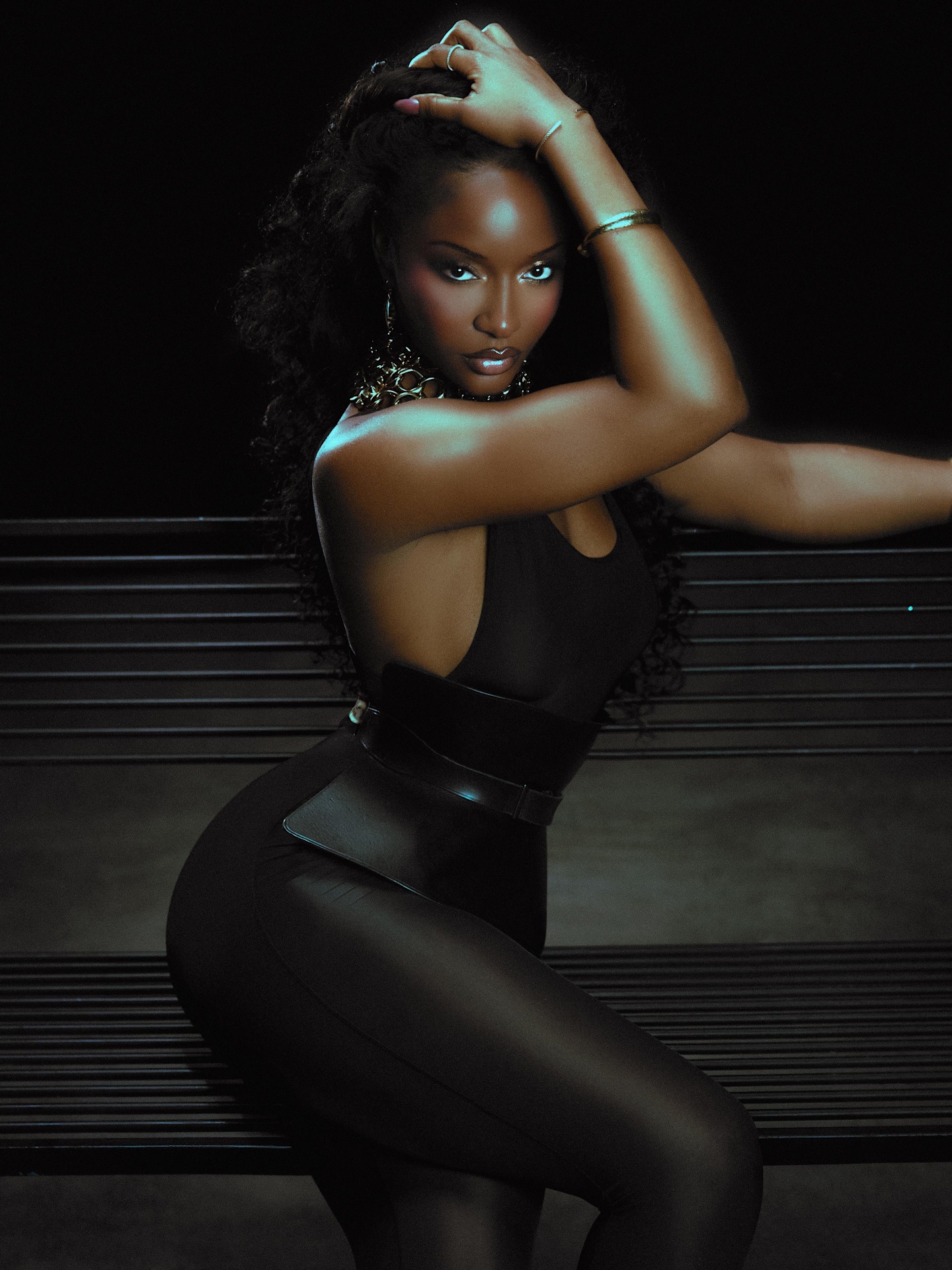
On “Ms. Paper,” she taps Bouyon phenom and FADER GEN F alum Theodora to create a party song with a rowdy, thumping bass. She delivers a sultry R&B duet with kwn and leans into afro R&B with Leon Thomas. “Misunderstood” has a pop-electronic feel while “Where Do We Go” gives dancehall. Layered behind the tracks are subtle, sparkly instrumentals — celestial, triangle-sounding clinks that give the production a spacey aura, a reminder that these are young Ayra’s dreams coming into fruition. When I ask her about that spiritual drive, she attests to her faith. “Whether you believe in God or not the power in manifestation is great. I manifest, but I go through Christ all the time.”
Much like Ayra herself, who radiates an unshakable sense of completeness, it’s nearly impossible to find a single flaw in Starrgirl. Cohesive as hell, zero-skips, with rich and full-bodied production, the album is like the adult version of her diaries from childhood, singing about heavy heartbreaks, quiet yearning, ambitious manifestations, and deep prayers.
On drop day, her village in Lagos celebrated by sitting on top of cars fitted up in purple traditional African wear and geles, holding signs in the street. "That’s my support system, that’s my village... They’re crazy, right? But at least you guys know where I get it from now."